
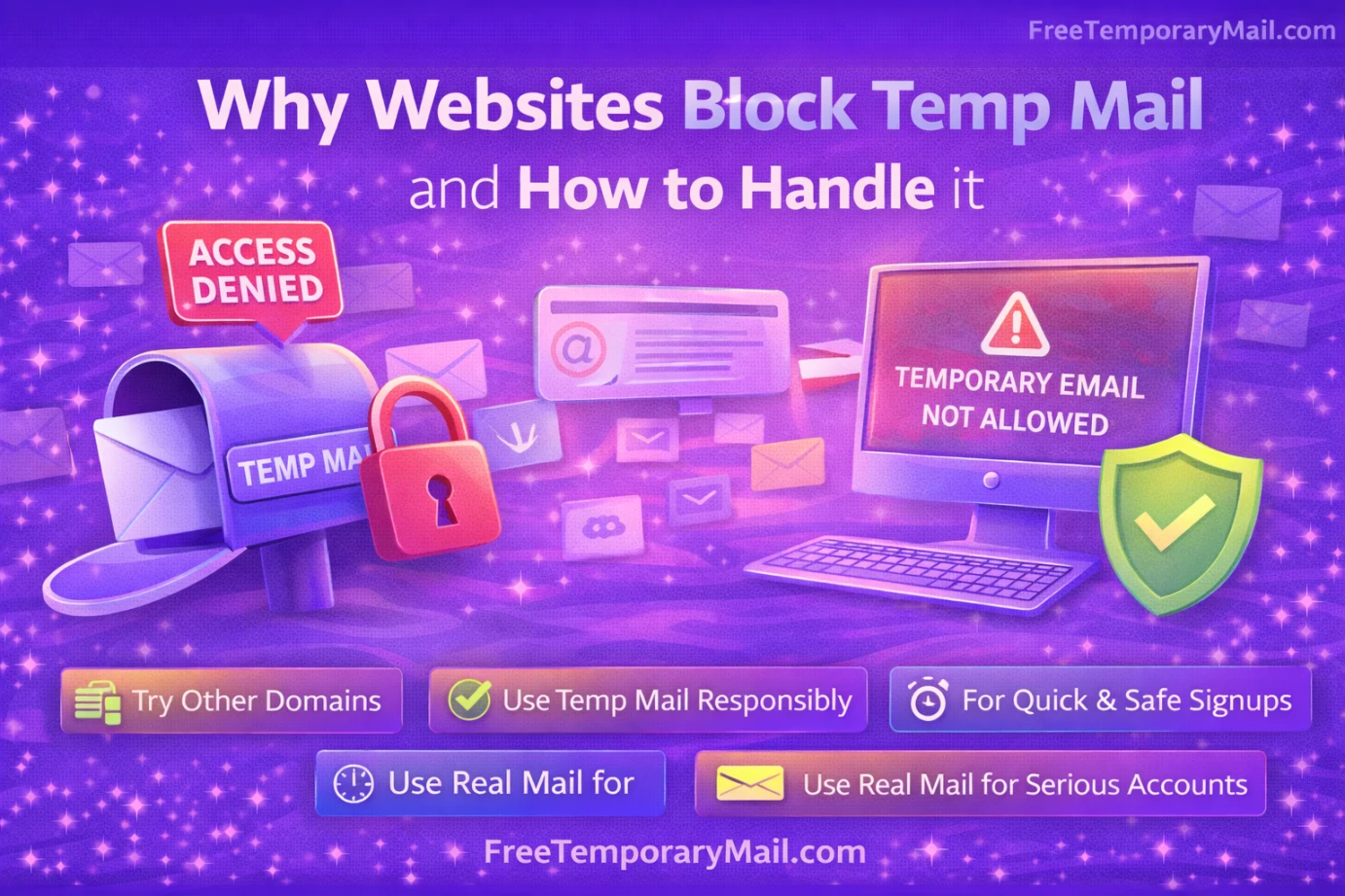
Why Websites Block Temp Mail and How to Handle It
Many users face a common problem while signing up on websites: their temp mail address is not accepted. The website shows an error saying "invalid email" or "temporary email not allowed".
So why do websites block temp mail? And what can you do when it happens? Let’s understand the reasons and smart solutions.
What Does It Mean When Temp Mail Is Blocked?
When a website blocks temp mail, it means the website detects that the mail domain belongs to a disposable mail service and refuses to accept it during signup.
This is done automatically using domain blacklists and detection systems.
Main Reasons Why Websites Block Temp Mail
1. To Prevent Fake Accounts
Some users create multiple fake accounts using disposable mail. To stop this, websites block temp mail services.
2. To Reduce Spam and Abuse
Temp mail can be misused for spam, bot activity, and abuse. Blocking disposable mail helps websites protect their systems.
3. To Force Long-Term Users
Websites want users who stay active and receive future updates. Real mail addresses help them send notifications and promotions.
4. To Protect Business Models
Free trials and offers can be abused using temp mail. Blocking disposable mail helps protect paid services.
Which Websites Usually Block Temp Mail?
Temp mail is commonly blocked on:
- Banking websites
- Crypto exchanges
- Large e-commerce platforms
- Subscription services
But many forums, tools, and communities still allow temp mail.
Is It Legal for Websites to Block Temp Mail?
Yes, websites have full right to choose which mail domains they accept. It is part of their security and business policy.
Blocking temp mail is not illegal and not related to government laws.
What Can You Do If Temp Mail Is Blocked?
1. Try a Different Temp Mail Domain
Some disposable mail services offer multiple domains. If one is blocked, another may still work.
2. Refresh to Get New Address
Sometimes refreshing and getting a new temp mail address can help if the website blocks only certain patterns.
3. Use Real Mail for Important Accounts
If the website is important and needs long-term access, use your real mail to avoid future problems.
4. Use Temp Mail Only for Short-Term Tasks
Temp mail works best for:
- Forums
- Free tools
- Testing services
Avoid using it for serious accounts.
Is It Safe to Try Bypassing Temp Mail Blocks?
Trying to bypass website rules may violate their terms of service. This can lead to account suspension or bans.
Always respect website policies and use temp mail responsibly.
How Free Temporary Mail Improves Delivery
Free Temporary Mail provides multiple mail domains and smart routing to improve message delivery and reduce blocking.
- Fast inbox refresh
- Multiple domain options
- No registration required
This increases chances of successful signup on many websites.
When Should You Avoid Temp Mail Completely?
Avoid temp mail when:
- Creating financial accounts
- Using business services
- Signing legal documents
In these cases, real mail is always the safest option.
Common Myths About Temp Mail Blocking
Myth: All websites block temp mail.
Truth: Many websites still accept disposable mail.
Myth: Using temp mail is illegal.
Truth: Using temp mail is legal in most countries.
Final Thoughts
Websites block temp mail mainly to prevent abuse and fake users. It is a business decision, not a legal issue.
Temp mail is still very useful for short-term signups, testing, and privacy protection when used responsibly.
Use real mail for serious accounts and temp mail for quick and risky signups — this is the best privacy strategy.
Recommended Reads
- Best Disposable Temp Mail Services in 2026 Best Disposable Temp Mail Services in 2026 - Free, Fast & Anonymous.
- How to Get Unlimited Free Temp Mail Online How to Get Unlimited Free Temp Mail Online | Free Temporary Mail.
- About Free Temporary Mail Know how our temp mail service protects your privacy.
- Contact Free Temporary Mail Team Have questions or suggestions? Get in touch with us.
- Free Temporary Mail – Disposable Temporary Email | Temp Mail With Free Temporary Mail, users can generate a temporary email address within seconds. There is no need for registration, login, or password creation..